Journal · 10 minute read
The Hot Sleeper's Playbook
Start with the room, because the experts do
Every credible sleep body starts in the same place, and it is not the linen closet. The National Heart, Lung, and Blood Institute's advice is blunt: keep the bedroom quiet, cool and dark, keep a consistent sleep schedule, and spend the hour before bed away from bright light. The American Academy of Sleep Medicine says the same in its own words: make the bedroom quiet and relaxing, and keep the room at a comfortable, cool temperature.
We sell cooling bedding, and we are telling you the thermostat and the schedule come first. That is deliberate. Bedding shapes the microclimate under the covers, the few cubic feet of air your body actually sleeps in, and that is real influence, but it cannot overrule a hot room, a heavy dinner or a 5 p.m. espresso. The AASM adds one more inconvenient sentence we quote on purpose: for chronic insomnia, the most effective long-term treatment is cognitive behavioral therapy, not a purchase. If sleep stays broken for weeks, that is a conversation with a clinician.
With the honest part said: for the sleeper who runs hot under a well set thermostat, fabric genuinely matters. Here is how each of ours works.
Cool to the touch: what Q-Max actually measures
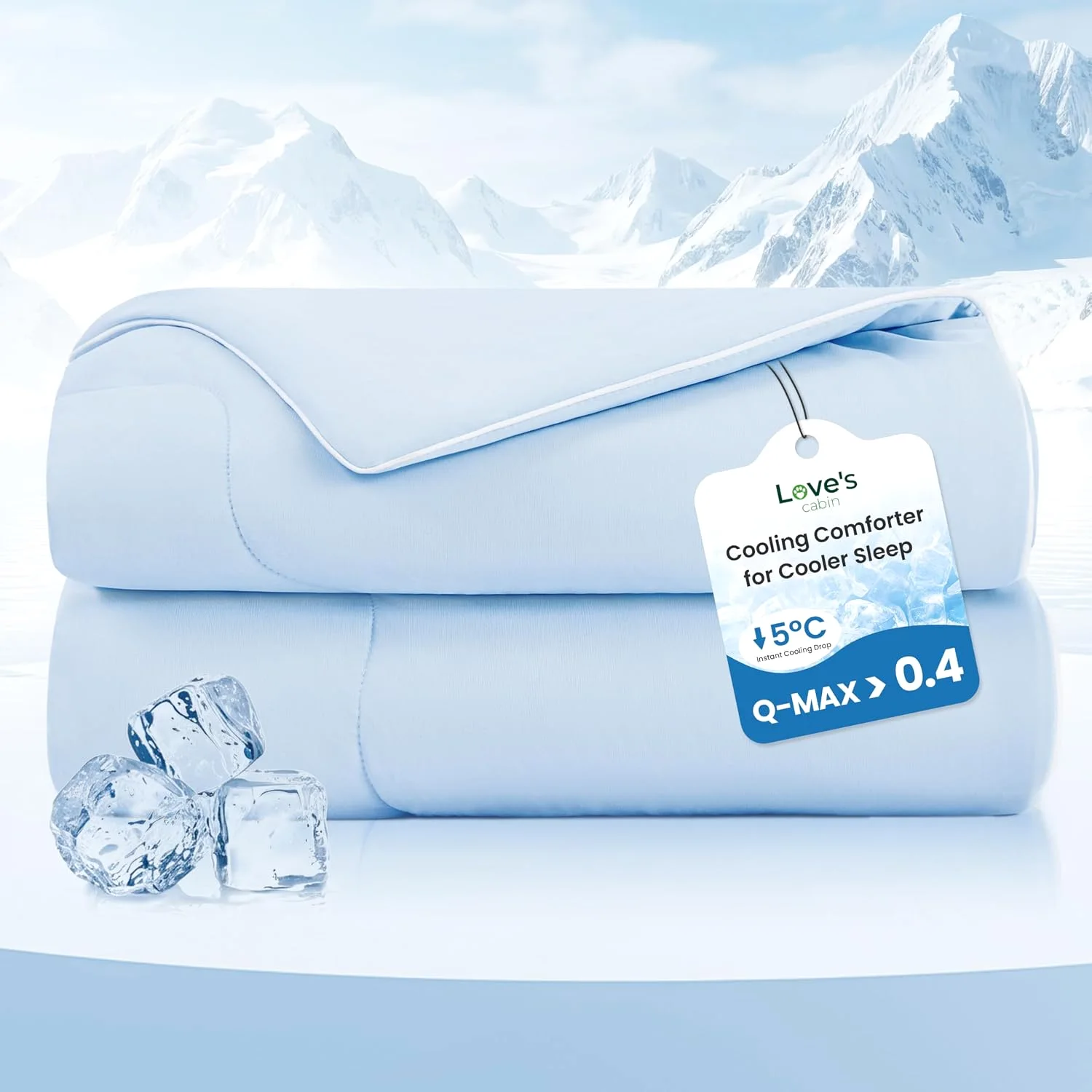
Fabrics feel cool for two different reasons, and the difference decides what to buy. The first is contact cooling: how fast a fabric pulls heat out of your skin in the first moment of touch. That is what the Q-Max number measures. Anything above 0.2 reads as cool to most hands; our Cooling Comforter measures above 0.4, so the first thirty seconds under it feel like the cold side of the pillow.
The engineering behind that number: 86 percent cooling nylon with 14 percent spandex, woven from 1.1 denier microfiber, a thread roughly ninety times thinner than a human hair. Thin threads mean more surface area, faster heat transfer and quicker moisture spread; the fabric disperses sweat in about two seconds, twice the pace of a standard polyester blend.
Contact cooling has one honest limit: it fades as the fabric warms to body temperature. That is why the second mechanism matters more after midnight.
Breathability: the all-night mechanism
The second reason fabric feels cool is airflow: how freely warm, humid air escapes the cocoon you make when you pull up the covers. This is where natural and semi-natural fibres earn their reputation.
Rayon derived from bamboo, the fibre behind our sheet sets, duvet covers and mattress topper, wicks moisture and lets it evaporate through the weave, so the microclimate never reaches the humid stage where sleep gets clammy. Muslin does the same job with geometry instead of fibre: our Cooling Muslin Blanket is four open layers of gauze in a bamboo rayon and cotton blend, and the air moves through it the way it moves through a summer curtain.
Satin plays a third position. Its cooling is modest, but its low-friction surface keeps skin from dragging and heating against the pillow, and that makes a satin pillowcase is the cheapest upgrade a warm sleeper can make.
| Fabric | Mechanism | Best position on the bed |
|---|---|---|
| Cooling nylon, Q-Max above 0.4 | Contact cooling, fast wicking | The comforter itself |
| Rayon from bamboo | Breathability, moisture wicking | Sheets, duvet cover, topper surface |
| Muslin gauze | Open structure, airflow | The only layer on the hottest nights |
| Satin | Low friction, light feel | Pillowcases |
Build the summer bed, layer by layer
A hot sleeper's bed is built like a cold sleeper's bed in reverse: everything must come off gracefully. The full summer stack, from the mattress up:
- Topper: breathable surface, never memory foam slabs that store heat. Our bamboo rayon topper cushions without wrapping you in insulation.
- Sheets: bamboo rayon or satin, fitted tight so no fabric bunches under your back.
- The one blanket: a muslin layer you can sleep under alone in July.
- The comforter: cooling nylon through summer, or a lightweight quilt if you prefer weightless to cold.
In the shoulder seasons the stack flexes: quilt over muslin in May, comforter back on in October. The point of layers is that the answer to a warm night is subtraction, not suffering.
The checklist, with the boring parts kept in
The complete hot sleeper protocol, bedding and all:
- Bedroom cool, quiet and dark, per the NHLBI. If the thermostat allows one indulgence, spend it here.
- Consistent wake time, weekends included. The schedule regulates more than the fabric ever will.
- No caffeine after mid afternoon, light dinner, screens off half an hour before bed, per the AASM list.
- Contact cooling where skin touches first: the comforter and the pillowcase.
- Breathability everywhere else: sheets and any layer you keep through the night.
- Wash cooling fabrics on gentle and cold; heat is the enemy of both the fibre and the finish. The full routine lives in our fabric care guide, or rather in the journal piece beside this one.
Browse the whole cooling shelf from the Love's Cabin catalogue: the comforter shelf holds the engineered fabrics, the sheet shelf the breathable ones, and the muslin shelf the airiest layer of all.