Journal · 9 minute read
The Bedding Size Chart, Decoded
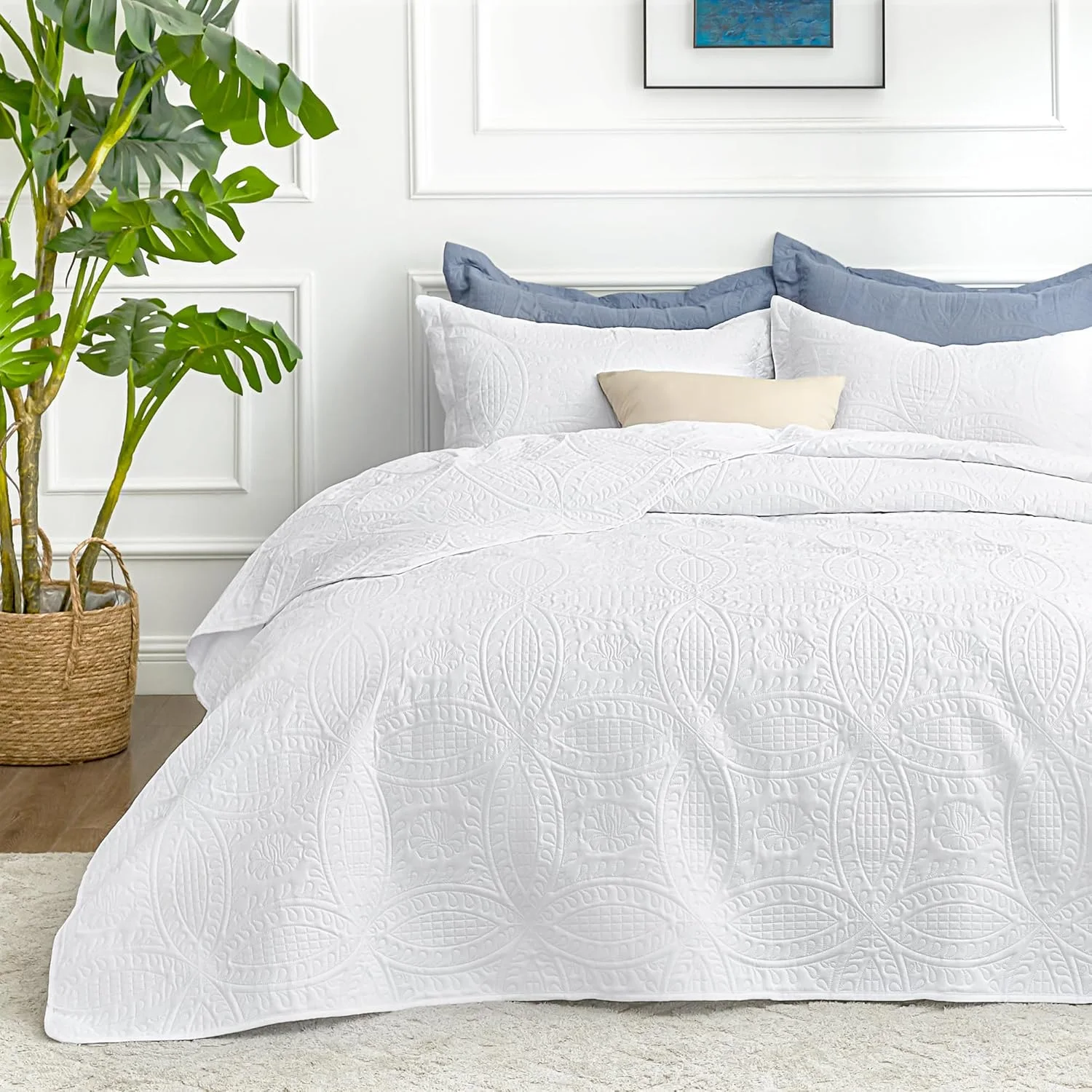
Why bedding sizes lie a little
Every bedding label carries two silent assumptions: the size of the mattress underneath, and how far the bedding should hang over its sides. The first is a real standard. A twin mattress in the United States is 38 by 75 inches, a queen is 60 by 80, a king is 76 by 80, and those numbers barely move between makers.
The second assumption is where beds go wrong. The overhang, called drop, depends on how tall your mattress is, and mattresses have quietly grown. Twenty years ago a 9 inch mattress was normal; today pillow tops and hybrids run 14, 16, even 20 inches. A comforter cut for the old world covers the top of a tall mattress and stops, leaving the sides bare like a tablecloth that gave up. That is not a manufacturing defect. It is arithmetic.
The whole chart runs from crib-adjacent twin to the 120 by 120 inch oversized king, and it shows how we cut Love's Cabin bedding against those numbers. Ten minutes here saves an exchange later.
The mattress chart, without decoration
Mattress sizes first, because everything hangs off them, literally:
| Mattress | Size in inches | Who sleeps on it |
|---|---|---|
| Twin | 38 x 75 | Children, single sleepers, bunk beds |
| Twin XL | 38 x 80 | Dorms, tall single sleepers |
| Full (Double) | 54 x 75 | Solo adults who like room, guest rooms |
| Queen | 60 x 80 | The American default for couples |
| King | 76 x 80 | Couples who share with children or dogs |
| California King | 72 x 84 | Tall sleepers, narrower but longer than king |
Two details trip people up. Twin and twin XL differ by five inches of length only, but those five inches decide whether the fitted sheet stays on a dorm bed. And a California king is not bigger than a king: it trades four inches of width for four inches of length. Buy for the mattress you have, not the grandest name.
Fitted sheets: the pocket is the size
For fitted sheets, the width and length matter less than the pocket, the vertical depth of the sheet's corners. A pocket shallower than your mattress is a nightly wrestling match; the corner pops loose at 3 a.m. without fail.
Measure mattress height from the seam of the bed base to the top of the mattress, including any topper you sleep on. Then give yourself an inch or two of headroom. Our bamboo rayon sheet sets run a 16 inch pocket with elastic corner straps, the satin sets run 14 inches with elastic all the way around, and the polar fleece sets run 16. If you add our mattress topper, remember it adds about two inches to the stack the pocket has to swallow.
One more honest number: pillowcases. Standard cases run 20 by 26 inches, queen 20 by 30, king 20 by 36. A king pillow in a standard case looks like luggage. Our satin pillowcase sets come in all three, plus a 54 inch body size.
Comforters and drop length
A comforter does not need to reach the floor; it needs to cover the mattress sides with a little authority. The math is simple: comforter width minus mattress width, divided by two, equals drop per side. A 90 inch queen comforter over a 60 inch queen mattress gives 15 inches of drop, which dresses a 12 inch mattress with room to spare.
Here is that math applied to our own comforter cuts:
| Our size | Typical cut | Drop on the named mattress |
|---|---|---|
| Twin / Twin XL | 66 to 68 in wide | 14 to 15 in per side |
| Full | 79 to 82 in wide | 12 to 14 in per side |
| Queen | 88 to 90 in wide | 14 to 15 in per side |
| King | 102 to 108 in wide | 13 to 16 in per side |
| California King | 104 in wide | 16 in per side |
Those drops comfortably dress mattresses to about 14 inches. Taller than that, and you have two options: accept a shorter drop, or step up a size and tuck the extra at the foot. Both are legitimate; only bare mattress sides are not.
The oversized king, and why it exists
The chart's quiet hero is the oversized king. A standard king bedspread at 106 inches gives a 16 inch mattress exactly 15 inches of drop and no allowance for pillow tuck, so the made bed looks trimmed rather than dressed. Our Summer Lightweight Quilt goes to 120 by 120 inches in the oversized king cut: 22 inches of drop per side on a king mattress, enough to cover a tall hybrid to the bed frame and still tuck.
The same line starts at twin and passes through a full/queen at 90 by 96 and a California king at 118 by 106, which makes it the one line in the quilt shelf that can dress literally every bed in the house, including the one nobody agrees on.
Sets follow the bed as well: quilt sets from full size up include two shams, twins take one, and the Coastal sets follow the same rule. Nothing needs to be bought twice.
A five minute buying routine
Everything above compresses to five steps:
- Measure the mattress: width, length, and height including the topper.
- Fitted sheets: pocket depth at least mattress height plus one inch. Elastic straps are not decoration; they are the mechanism.
- Comforters and quilts: aim for 12 to 16 inches of drop per side on the arithmetic above. Tall mattress, step a size up.
- Pillowcases: match the pillow, not the bed. Kings in kings, queens in queens.
- When between sizes, go up. A tucked surplus looks intentional; a shortfall never does.
The full catalogue, size by size and colour by colour, starts at the Love's Cabin home page; every product page in the comforter, sheet and quilt shelves lists its exact cut in inches, because a chart you cannot verify is just a promise.